Monitor your webhooks before silent failures spread.

Webhooks succeed. Outcomes fail. Slipplane tracks webhook events and alerts when the action never completes.

A 200 response only means the event was received. It does not mean the job actually finished.

Slipplane webhook monitoring system visual

Webhook delivery does not guarantee completion.

Most teams assume a delivered webhook means success. That assumption is wrong.

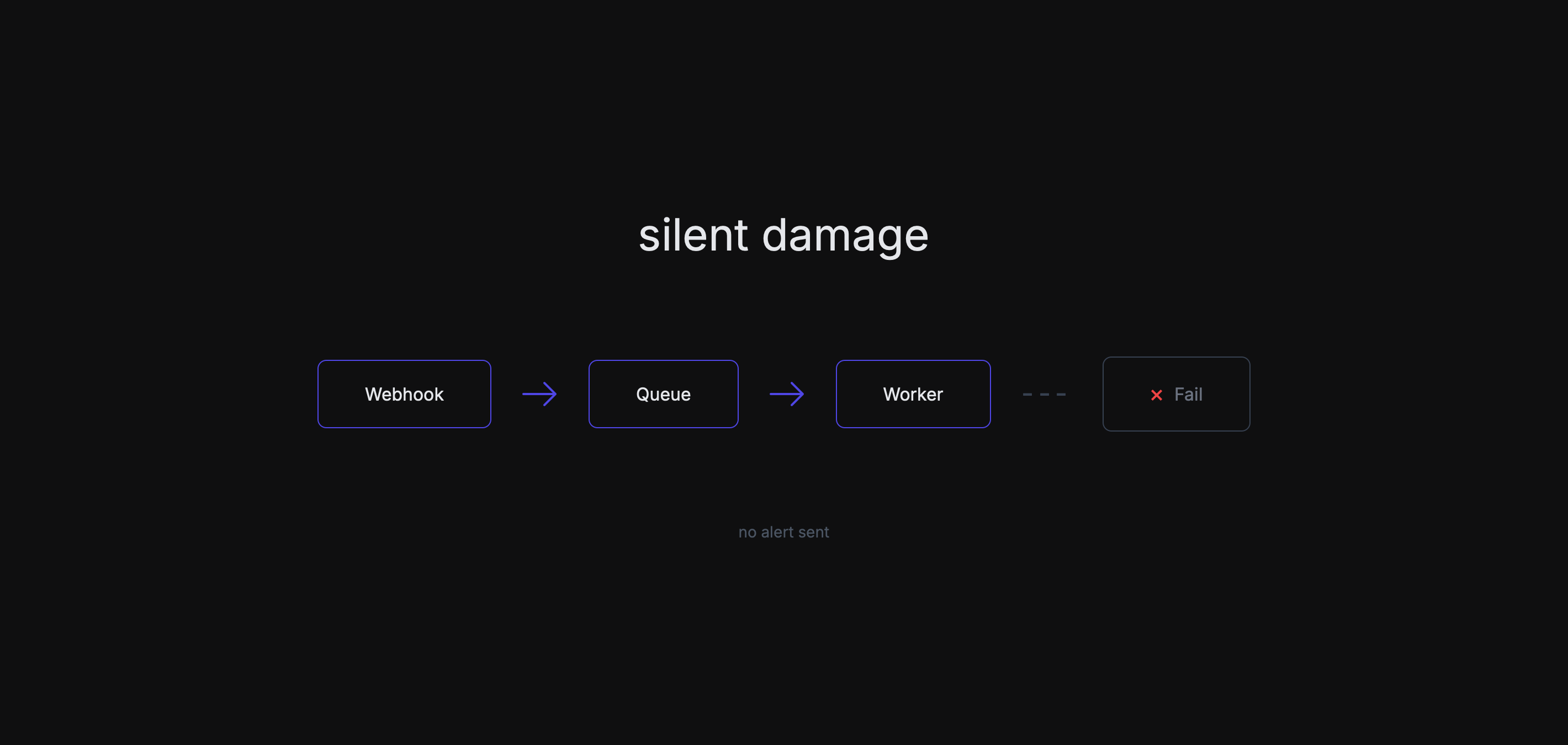
Events are received, but the downstream action can still fail silently.

Jobs crash. Workflows time out. Systems break after delivery.

From the outside, everything looks healthy. Inside the system, the outcome never happened.
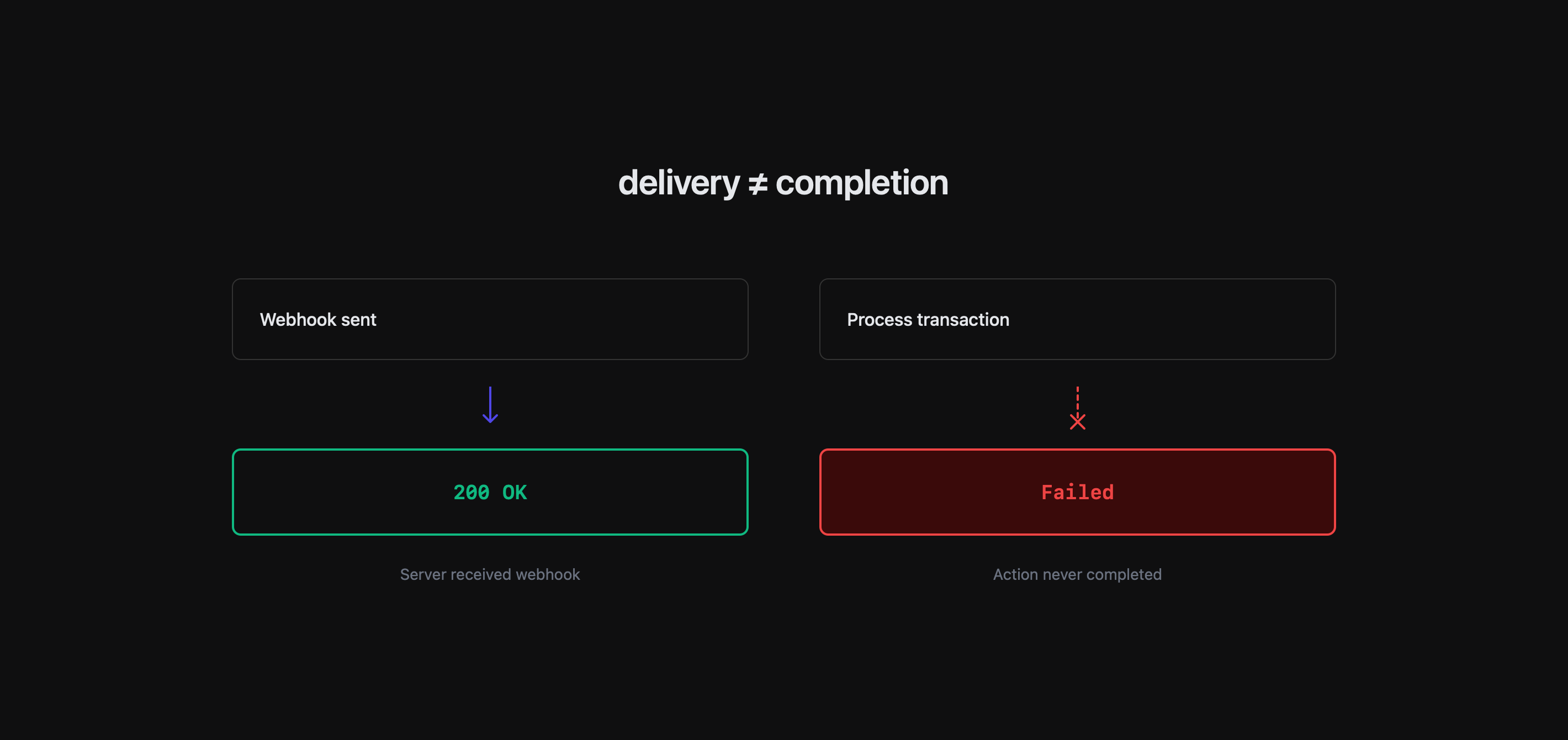
Webhook completion failure visual

Silent failures create real operational and revenue damage.

A webhook can return 200 and still fail to do the one thing it was supposed to trigger.

That means missed updates, broken workflows, failed provisioning, lost subscriptions, or delayed operations.

The damage compounds because no one is alerted when the outcome fails.

Slipplane removes that blind spot.

Silent webhook failure impact visual

The product tracks the webhook lifecycle itself.

Slipplane monitors each event after it is received and verifies whether the expected outcome actually happens.

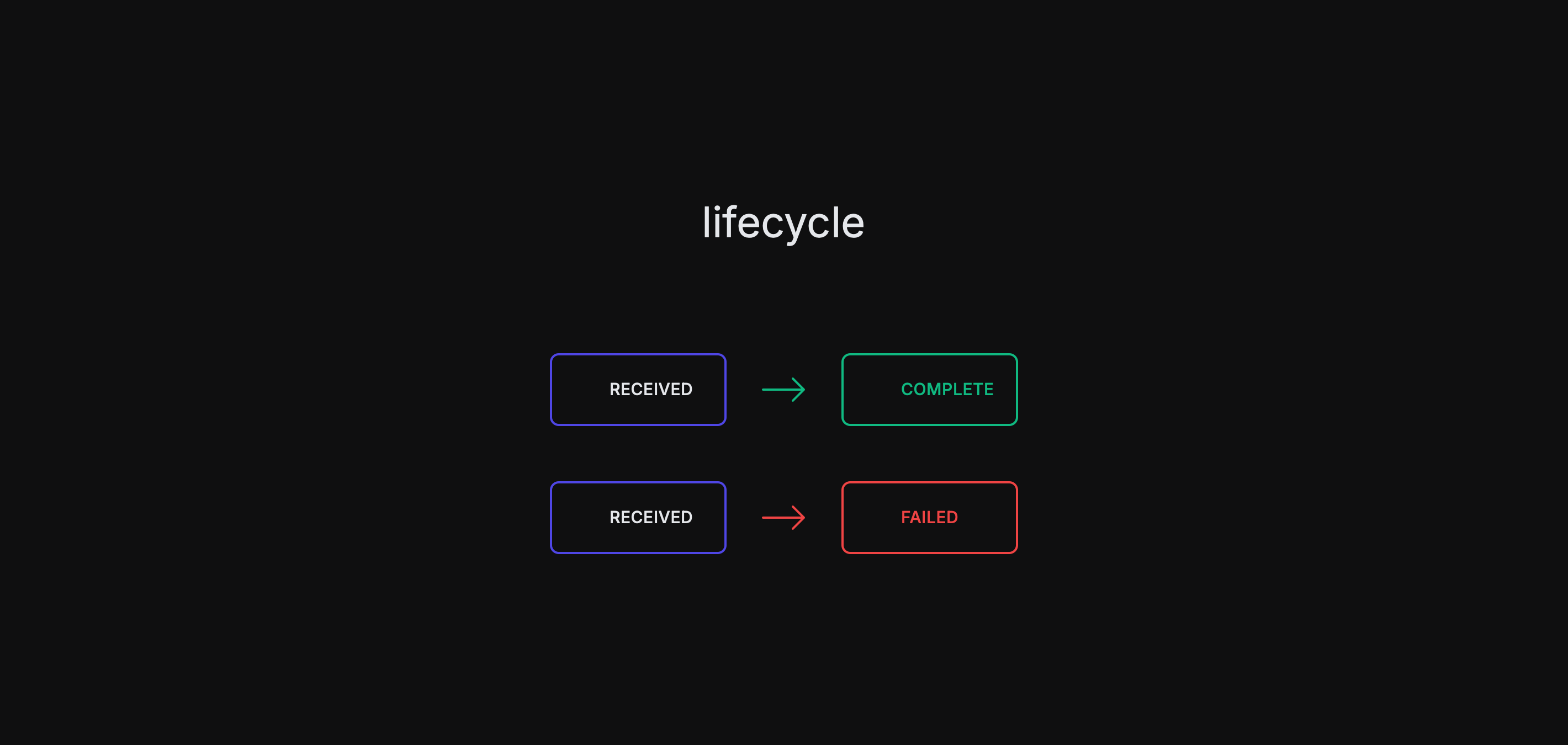
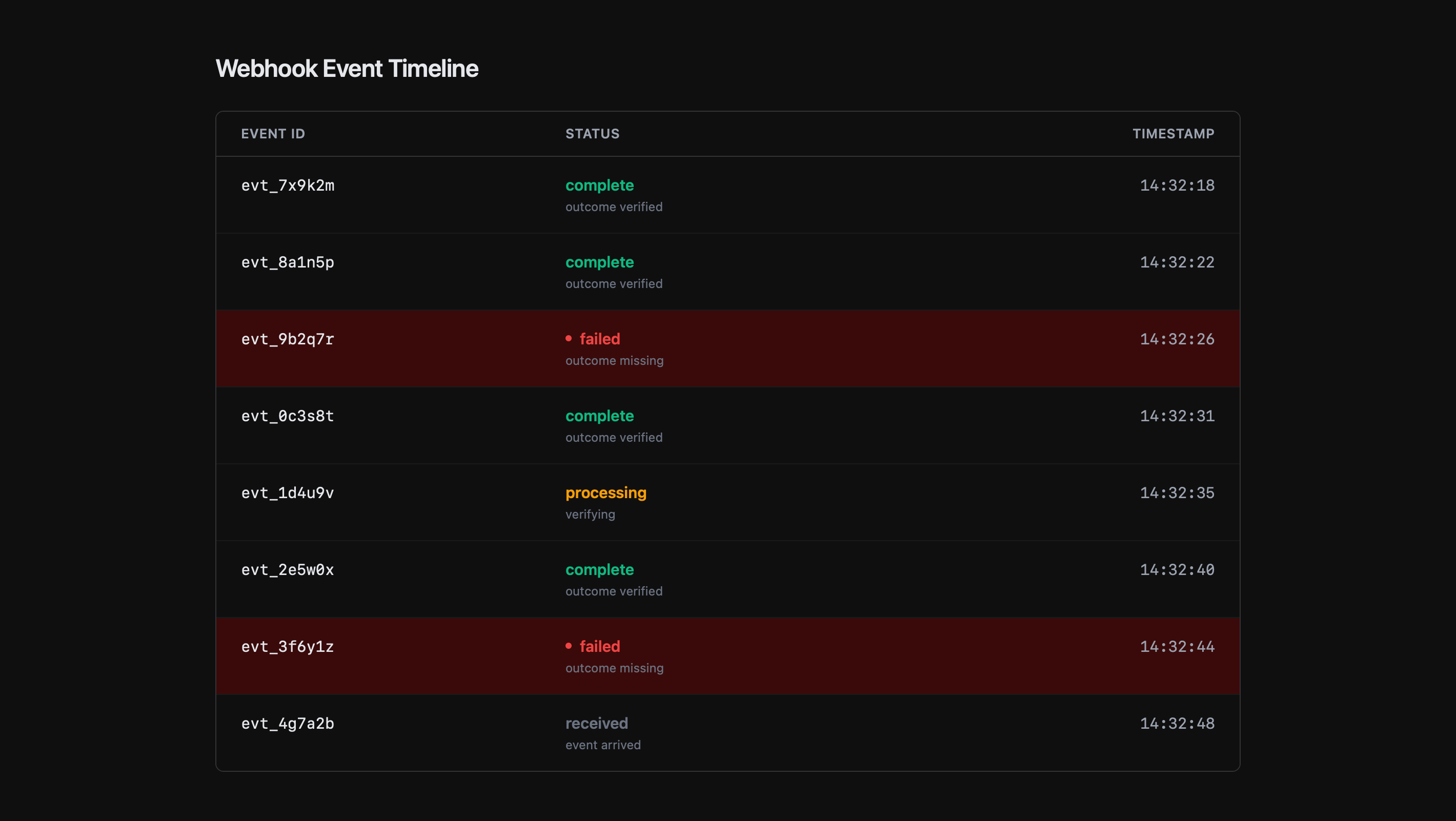
Every event moves through a simple lifecycle:

received
complete
failed

If the expected completion signal never arrives, the event is marked failed and an alert is generated with proof.

Webhook lifecycle monitoring visual

Failures become operational events immediately.

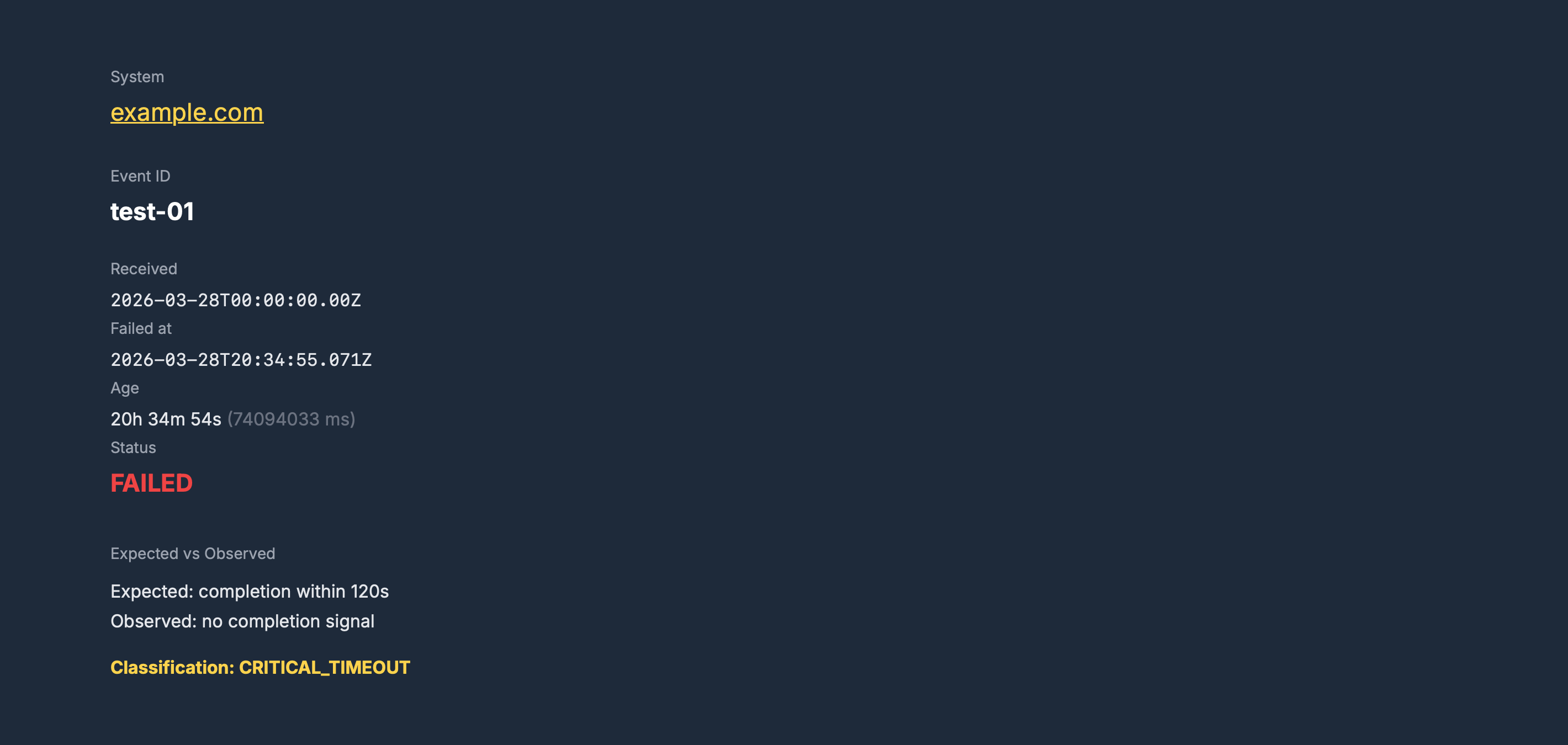
When a webhook-triggered action fails to complete, Slipplane generates a structured alert instead of letting the event disappear into logs.

The alert shows exactly what happened, when it happened, and why the outcome is considered failed.

Email delivery brings the incident to operators immediately.

No dashboard-hunting. No waiting for support tickets. No guessing.

Webhook failure alert visual

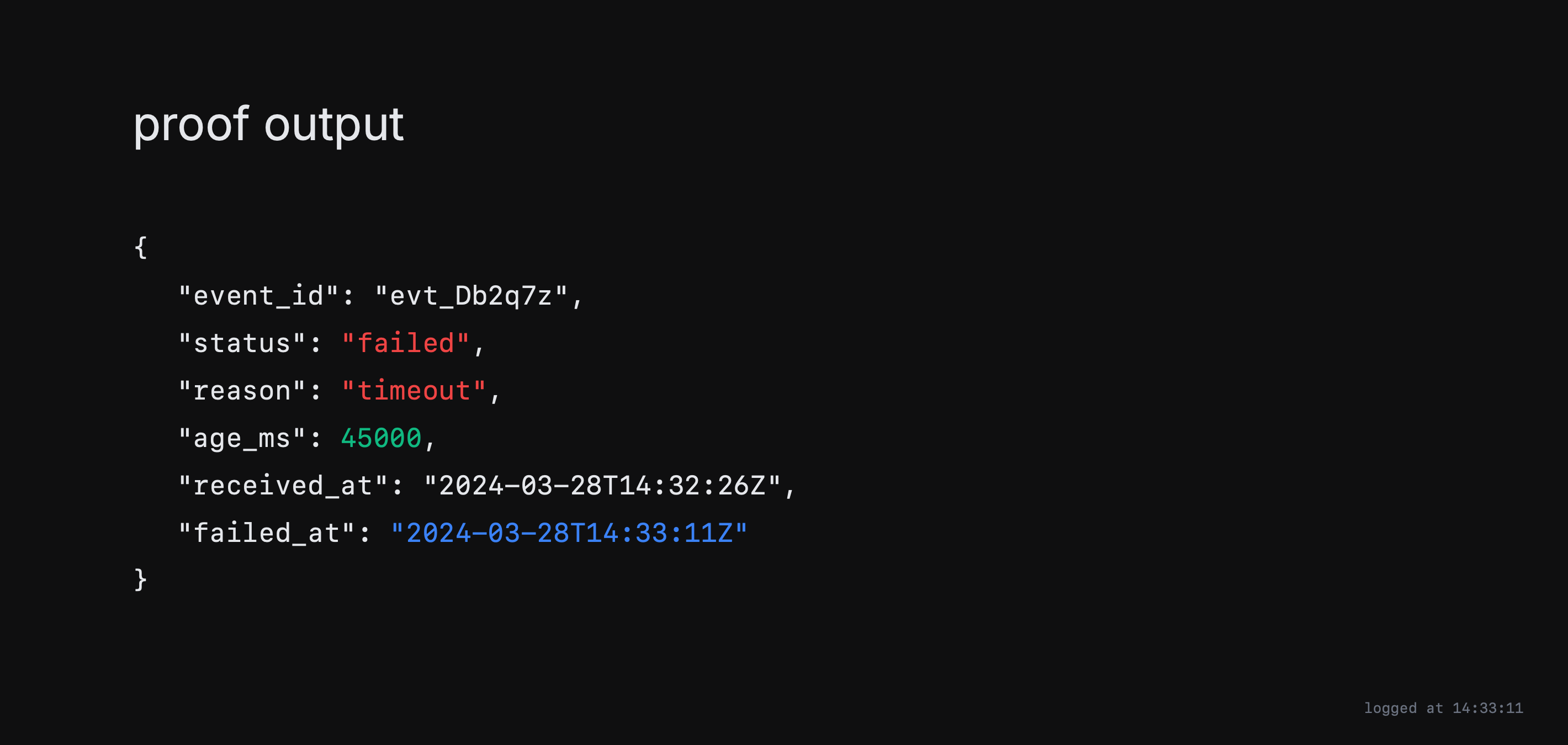
Failure output is written like proof, not noise.

Slipplane alerts are structured as incident evidence rather than generic monitoring messages.

Each alert identifies:

  • event ID
  • received timestamp
  • failure timestamp
  • age at failure
  • current status

Engineers get immediate context to investigate what broke and where the expected outcome stopped.

Webhook proof alert visual

Make the problem concrete.

Stripe webhook fires → create subscription.

The webhook returns 200, so everything looks successful.

But the subscription was never created.

No alert. No visibility.

Slipplane detects that gap and records: event received, completion never happened.

Stripe webhook completion example visual

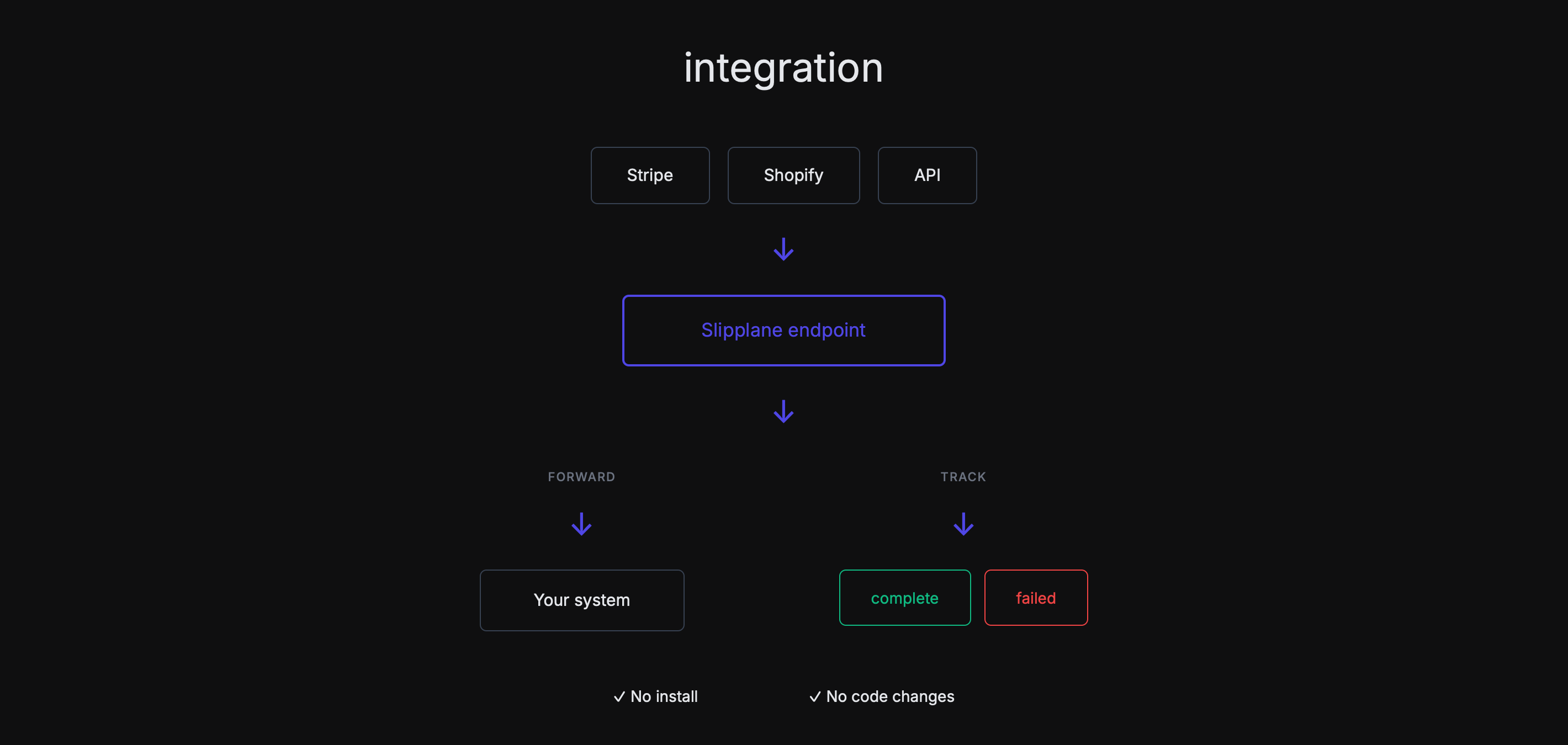
No install. No production access. Just a webhook endpoint.

Slipplane does not require agents, code deployment, or production system access.

You point your webhook flow to the monitoring endpoint, Slipplane forwards the event, tracks state, and verifies completion.

The result is minimal friction and immediate visibility into silent failures that would otherwise stay hidden.

Webhook monitoring integration diagram

Monitoring delivery is not enough.

A delivered webhook does not prove the action completed.

Slipplane verifies whether the expected outcome actually happened.

If it catches one silent failure, it pays for itself.

Not monitoring delivery. Verifying outcome.